
About
“Music has to be recognized as an agent of social development, in the highest sense because it transmits the highest values — solidarity, harmony and mutual compassion. It has the ability to unite an entire community and to express sublime feelings.”
- Gustavo Dudamel

History
The musical revolution that has been sweeping over the South American continent the past decades, has caused a stir of global proportions. The trail-breaking results achieved through teaching music to underprivileged children has given forth fruits that, not only have transformed the community within their country borders, but also created prestigious musicians at an international basis.
The movement was started in Venezuela, through the music school El Sistema that has evoked global interest the past decade. Then it spread to the rest of South America reaching Bolivia in 1998, when the organization SICOR (Sistema de Coros y Orquestas) was founded. Today Bolivia thousands of children involved in musical activities all around the country, both government-supported and initialized by private organisations.
Growth and development
Bolivia has had an enormous growth the past three decades, both economically and culturally. The rise of the classical music education has been led by idealistic Bolivians and internationally acclaimed artists hand in hand. But no growth comes without resistance. There are numerous challenges facing the endeavours of Bolivian supporters of classical music education. Mostly economical, but also on the level of qualified resources and teachers.

About the writer
Nikolai Clavier finished his bachelor in performing music at Barratt Due Music Institute in 2013, with Soon Mi Chung as viola teacher, and PPU (Practical Pedagogical Education) with Grete Helle Rasmussen and Sigyn Fossnes as teachers. In addition to this he has been practicing as a music teacher in Oslo, Bærum and at the Valdres Festival, playing in the Artema Quartet and initiating several culture projects such as the children musical ”Friend Island” and ”Jazz at the Munch museum” during my stay in Oslo.
The past year he has been in Kristiansand, where I participated in the local music community. There he established the Jegersberg quartet and worked as a composer and arranger for many colleagues. He also participated in projects at the regional concert hall, Kilden, among them the highly praised production of Les Misérables. He is now living in Bolivia and working as a teacher in collaboration with APAC (Acociación pro Arte y Cultura).
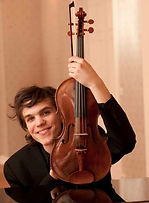
"For several years I have been interested in the music schools of South America, and the results they have been able to achieve. Two years ago I participated in the bi-national project Orchestra NoVe – a cooperation between 50 Norwegian and 50 Venezuelan musicians – and thus established good bonds with the young musicians of Venezuela. I have always been motivated by the thought that all the learning and experience gained over there is something Norway could benefit greatly from. Therefore I wish to learn, and to evolve as a teacher through cooperation with a music school that, through meeting it’s own social reality, manages to use the power of music to achieve magical results."
"I have always had a dream of being able to use music as a tool for positive change at the level of society. Even a welfare state such as Norway, is challenged in the task of meeting the needs of it’s countrymen, in a modern world that changing rapidly. Music is not only a meaningful craft, but it helps creating joy, happiness and fostering spiritual growth. Still, there remains to learn how we can device music education as a means to form the future society in a positive direction, and preventing the negative forces that today have their grasp on our younger generations."
About this project
This is a collaboration between Norwegian culture institutions and the Bolivian music schools. This project has a threefold purpose, involving several parties. Firstly it is an opportunity for me as teacher to cooperate with music teachers from Bolivia, and through this building bonds of friendship and interaction cross border. It is in the meeting between cultural personages and teachers at this level that mutual learning and engagement evolves.
Secondly, my purpose is to help an organisation that is in a formative phase, to build its future resources, strengthen the work force and of course teach the children participating in the system. And lastly I hope, as a teacher, to achieve learning and development of skills within my field of expertise – a resource that may be counted as a prolonging of my studies, and probably benefit the future cultural efforts in Norway as a nation.
Collaborators
There are many persons and institutions involved on this project, both on the Norwegian side and the Bolivian side.
The financial help they give is crucial for the realisation of this project and the success of all the parties involved. Any contribution would go directly to the place were it is intended, there is no administration leek.